Cataract Pillar Demo

Cataract
Have you noticed your vision worsening as you age? You may have cataracts, a common eye condition that affects nearly everyone over 60 years of age.
Luckily, the condition is highly treatable through cataract surgery, a minimally invasive procedure performed by the experienced ophthalmologists at Associated Eye Care.
What are Cataracts?
Cataracts are cloudy areas within the natural lens of the eye that typically develop as a result of aging. As you get older, the proteins within the lens of your eye begin to change and form cloudy areas known as cataracts.
Almost everyone will get cataracts after age 60, but they often begin development around age 40. Because they form so slowly over time, many people with cataracts don't even know they have them.
As they continue to progress, you may have symptoms like:

Light sensitivity
Blurry or cloudy vision
Poor night vision
Halos and glare around lights
Double vision
Faded, dull, or yellow vision
Other prominent conditions in older adults, such as glaucoma and macular degeneration, may present with similar symptoms. It is essential to schedule regular eye exams with your eye doctor at Associated Eye Care so they can ensure you are properly diagnosed and recommend the best course of treatment to get your vision and eye health back on track.

When Should I Have Cataract Surgery?
Not everyone with cataracts needs cataract surgery right away. Your eye doctor may recommend glasses or contacts to help with vision problems due to early cataracts.
Once the cataracts begin to impact your ability to comfortably perform activities like driving, working, socializing, or maintaining an active lifestyle, you should talk to your eye doctor about cataract surgery. The procedure can restore your vision and give you the confidence you need to get back to all your favorite activities.
Check if you’re experiencing symptoms of cataracts and discover how surgery can restore your clarity and independence.
take our cataract self-test
What to Expect During Cataract Surgery
Before beginning the procedure, your cataract surgeon will ensure you are comfortable by applying numbing eye drops to your eye. Once your eye has been numbed, they will create a tiny incision to access the natural lens of your eye. Your cataract surgeon will then break up the natural lens and suction it out.
The cataract will be replaced with the intraocular lens (IOL) of your choice, a clear lens that cannot develop cataracts. Some types of IOLs may contain prescription to help focus light and reduce the need for glasses after surgery. Most patients do not need stitches and heal quickly, returning to normal activities within one to three days.
At your follow-up appointments, your eye doctor will provide you with personalized recommendations on when it's safe to return to things like driving based on how you are healing. They will also ensure you are using your protective eye shield and prescription eye drops as directed to protect your eye during recovery.
If both eyes require surgery, the eyes will be treated one at a time. Surgery can be performed in the second eye once the first eye has had time to improve. Most patients notice visual improvements within the first few days of healing, but it can take around six weeks to recover from the procedure fully.
Which Cataract Package Should I Choose?
Prior to surgery, you will undergo a cataract surgery consultation. At this visit, your eye doctor will perform a thorough eye exam and multiple measurements of the eyes to determine whether you are a good candidate for cataract surgery and help you select the best Cataract Package to suit your vision needs, lifestyle, and budget.
The Cataract Packages offered at Associated Eye Care include:
Basic Cataract Surgery
Basic cataract surgery includes the basic monofocal lenses typically covered by Medicare or medical insurance. Basic cataract surgery is intended to provide clear vision when prescription glasses or contact lenses are worn. Most patients who undergo basic cataract surgery wear prescription glasses for clearest vision at both near and far distances.

Custom Single Focus
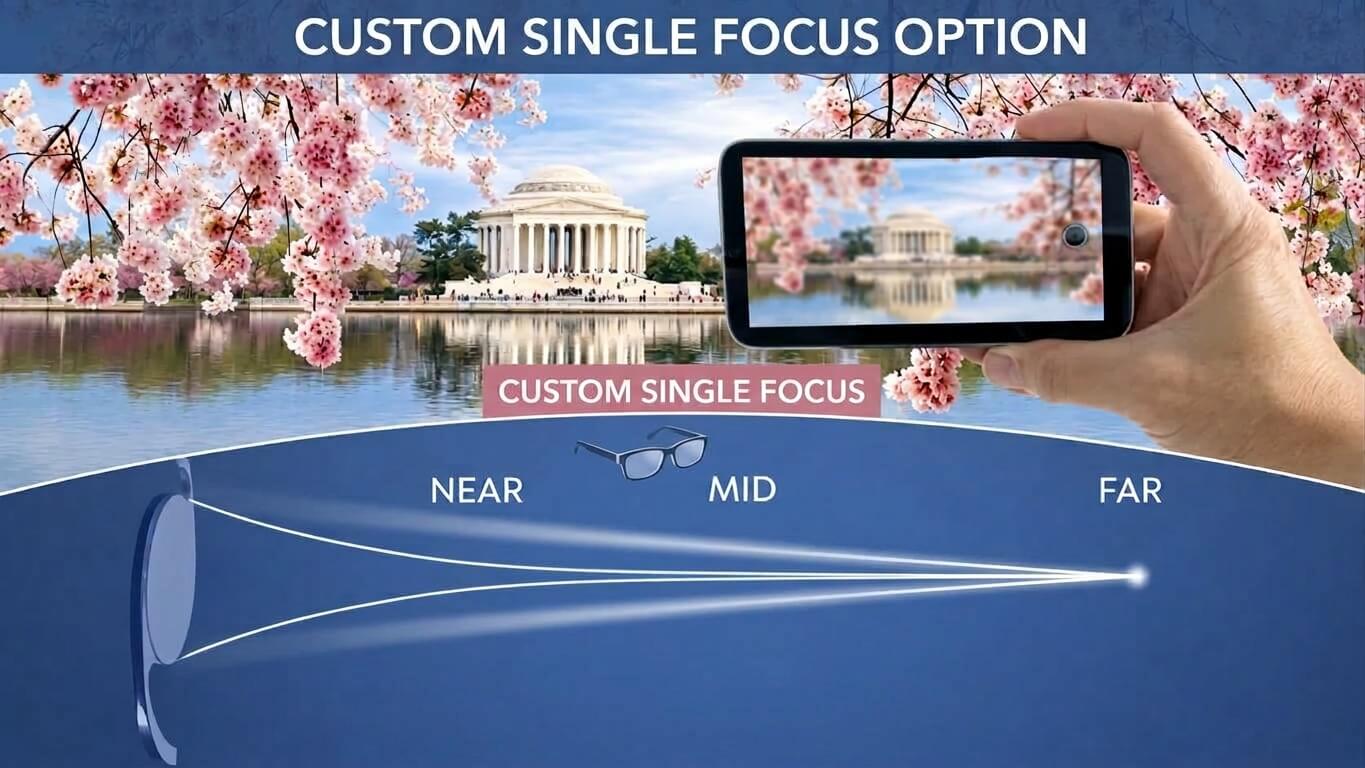
In addition to correcting the visual effects from the cataracts, cataract surgery with the Custom Single Focus package utilizes additional measurements and enhanced lens implants to provide clear vision at a single distance without glasses. Glasses are still required for clear vision at other distances. Most commonly, patients choose clear distance vision and wear glasses for near and mid-range tasks. However, it is an option to place lenses that allow clear near vision without glasses, while wearing glasses for distance activities.
Custom Range of Focus
The Custom Range of Focus package delivers function vision at a range of distances including far, mid-range, and sometimes near. A variety of lenses are available to provide this visual range using different technologies, each with unique advantages and disadvantages. Extended Depth of Focus (EDOF) lenses provide continuous vision from far distance to about an arm’s reach. Common lenses in this family include PureSee, Symfony, Vivity, and Apthera. Full Visual Range (FVR) lenses provide the widest range of focus extending from far to near, often allowing reading without glasses. Common lenses in this family include Odyssey, Envy, and PanOptix. Most range of focus lenses require compromises in the form of nighttime halos or glare, though some low-glare options are now available. If you are interested in the Custom Range of Focus package, your surgeon will review the lens options with you to determine which will best meet your needs.

Custom Light Adjustable
The Light Adjustable Lens (LAL) is a unique IOL that can be adjusted after cataract surgery using non-invasive UV light treatments to reach your desired visual outcome. The LAL offers the most precise outcomes of any lens option, as it is the only lens that can be adjusted after surgery to fine-tune your results. It is also the only lens that allows you to “test-drive” a specific distance of focus before finalizing your outcome. This makes it an excellent option for anyone wanting an extremely precise outcome, those desiring monovision, and those uncertain of their desired distance of focus.

Custom Cataract Surgery Pricing
We offer cataract surgery choices to meet your needs and budget. Custom cataract surgery includes treatment of the cataract and an additional package of services designed to reduce your need for glasses. Insurance benefits apply for the cataract surgery. However, Custom cataract surgery packages are not covered by medical insurance. Below are the self-pay prices for each Custom package option. The price covers additional preoperative measurements, advanced lens implants, astigmatism treatment, an extended care period after surgery, and LASIK touch-up within 1-year, when necessary.
Single Distance Astigmatism Package
(Near or Far)
$2,800
(Per eye)
Blended Vision Astigmatism Package
(Reading + Distance)
$2,800
(Per eye)
Presbyopia Package
(Near, Intermediate, and Far)
$3,900
(Per eye)
Custom Single Focus
$2595.00
(Per eye)
Custom Range of Focus
$3995.00
(Per eye)
Custom Light Adjustable
$4995.00
(Per eye)
Do you want to learn more about restoring your vision with cataract surgery?

at Associated Eye Care today!